
Project Trailer
Project Overview
Worlds Apart was developed as part of my Collaborative Games Development module, where I worked within a large multidisciplinary team of around 20 students.
My main role was within the design team, where I worked primarily as one of the project’s level designers. I was also involved in wider game design tasks, gameplay implementation support, engine/build work, VFX implementation, and helping connect the work of the art, design, and tech teams inside playable level spaces.
The project went through several major changes during development. It began as a narrative-focused puzzle game with a world-switching mechanic, but after playtesting and team reflection, Worlds Apart was rescoped into a clearer puzzle-focused experience built around collecting key objects, solving environmental puzzles, and using real-world and imaginary-world states to progress.
My contribution focused on taking levels from early ideas and diagrams through to blockout, implementation, playtesting, iteration, readability improvements, collision fixes, puzzle flow improvements, and final polish.
Project Details
Project Title: Worlds Apart
Module: Collaborative Games Development
Team Size: Around 20 students
Role: Level Designer / Game Designer
Additional Responsibilities: Gameplay support, VFX implementation, engine/build support, level polish
Development Focus: Puzzle design, level design, world-switching readability, player guidance, playtesting response
Core Contribution: Planning, blocking out, testing, and improving playable level spaces
Project Link : https://devalotgames.itch.io/worlds-apart
My Role Within The Team
At the start of the module, I was assigned to the design discipline. Within that wider role, my responsibilities included:
- game design
- level design
- gameplay programming support
- engine/build management support
- VFX design and implementation
- level polish and bug fixing
Although I contributed across several areas, my strongest contribution was in level design.
I worked on early level ideas, bubble maps, annotated pixel maps, puzzle planning, level blockouts, playable implementation, collision fixes, player guidance, and playtest-driven iteration. My work helped turn the team’s ideas into functional level spaces that players could move through, understand, and complete.
Early Planning & Pre-Production
During the first week, the design team realised that we had started moving too quickly into implementation before completing enough planning and documentation.
This was an important early lesson because it showed that, in a team project, moving fast is not always the same as moving effectively. Without clear documentation, the team risked building features and levels before everyone properly understood the intended direction.
To fix this, the design team created a list of missing planning tasks and assigned them across the team. This helped rebalance the project and gave us a clearer structure before moving further into development.
This stage helped me understand the importance of planning in collaborative work. In a solo project, unclear planning mainly affects your own workflow. In a team project, unclear planning can affect multiple departments at once.
Initial Level Ideas
After speaking with my design lead, I was tasked with creating initial level ideas for Worlds Apart.
I developed three different level concepts, which were all approved by the design lead. We decided to focus on the courtyard level first because it felt like the strongest and most achievable option for the project scope. The other concepts were kept as possible additions if time allowed.
This task helped establish the early level direction for the game and gave the design team a clearer idea of how the player might experience the world-switching mechanic through environmental puzzles.
Level Diagrams & Documentation
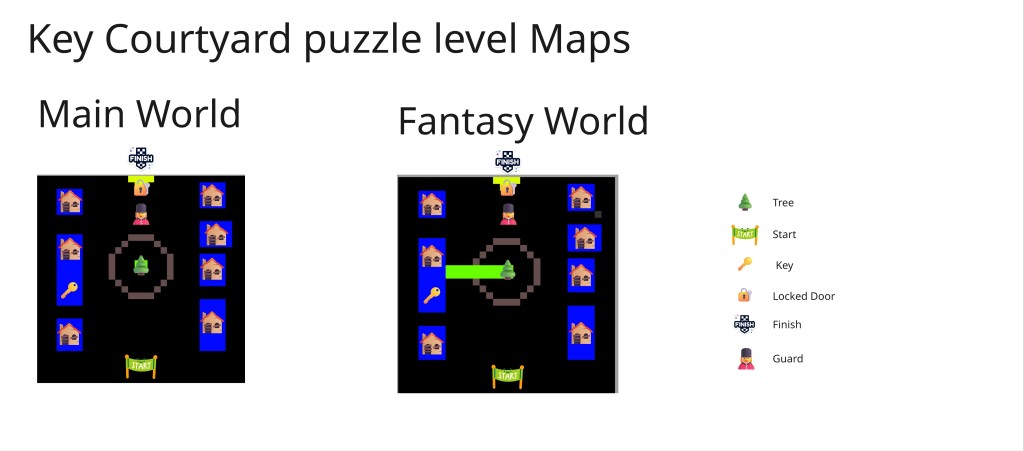
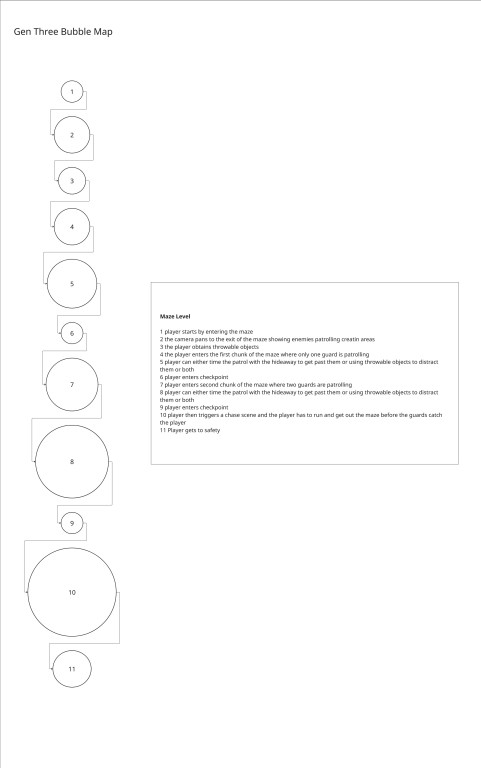
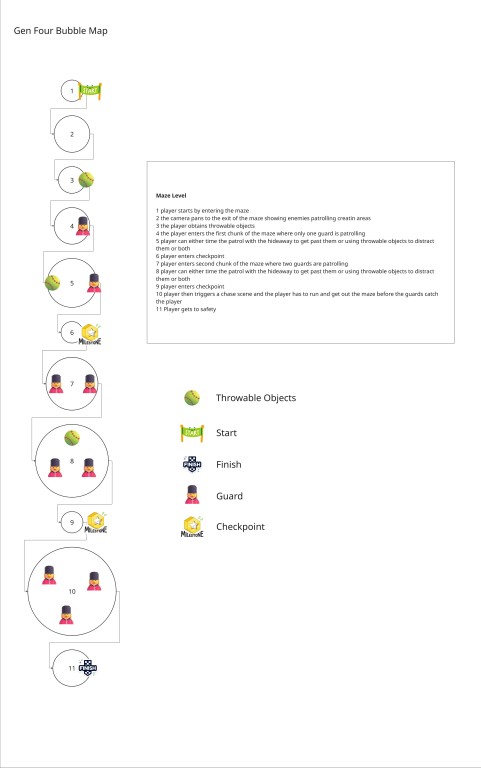
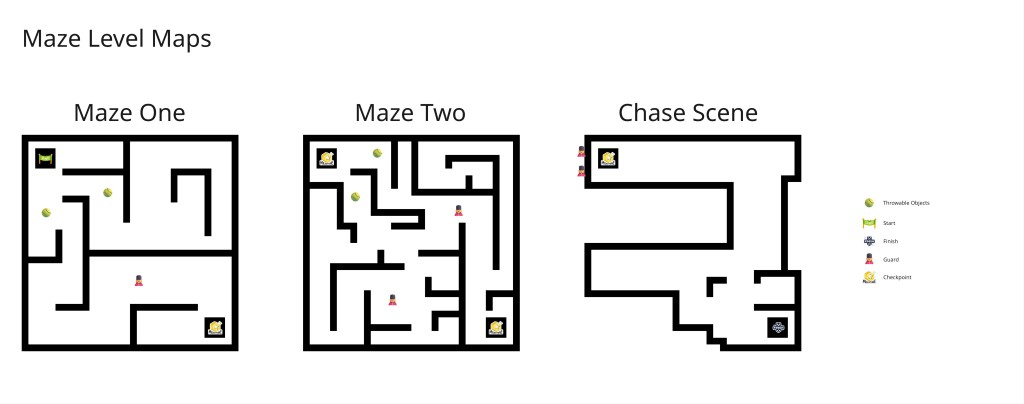
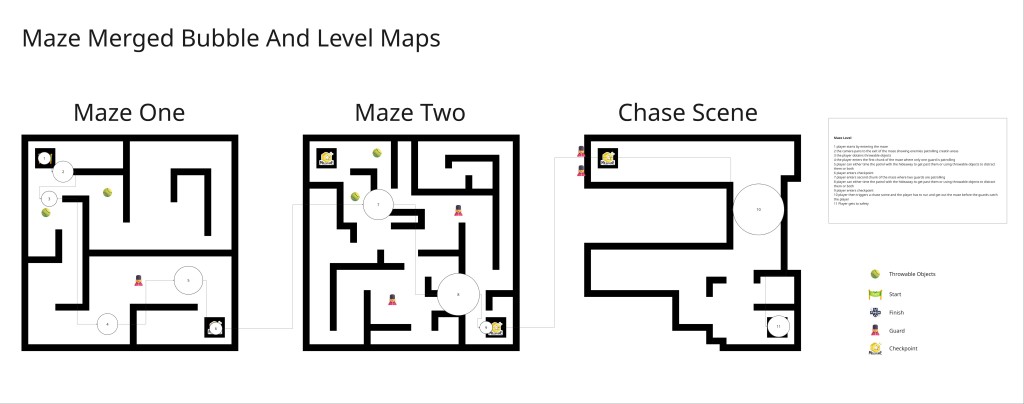
Once the courtyard level idea was approved, I created:
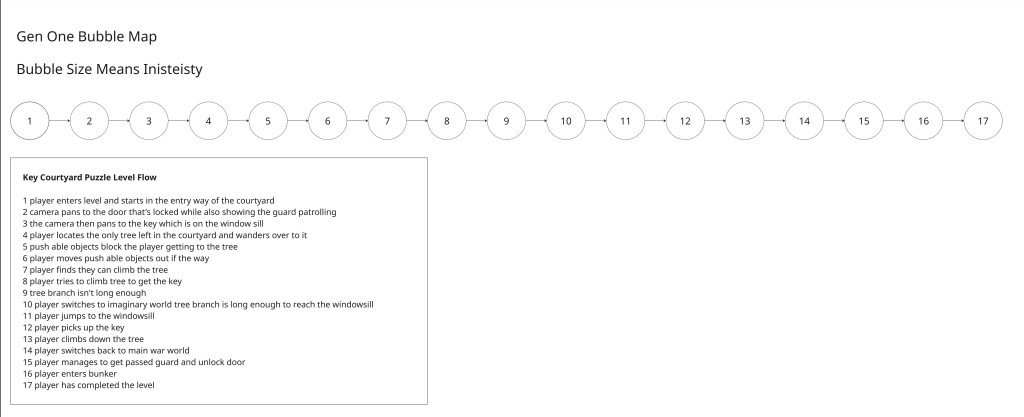
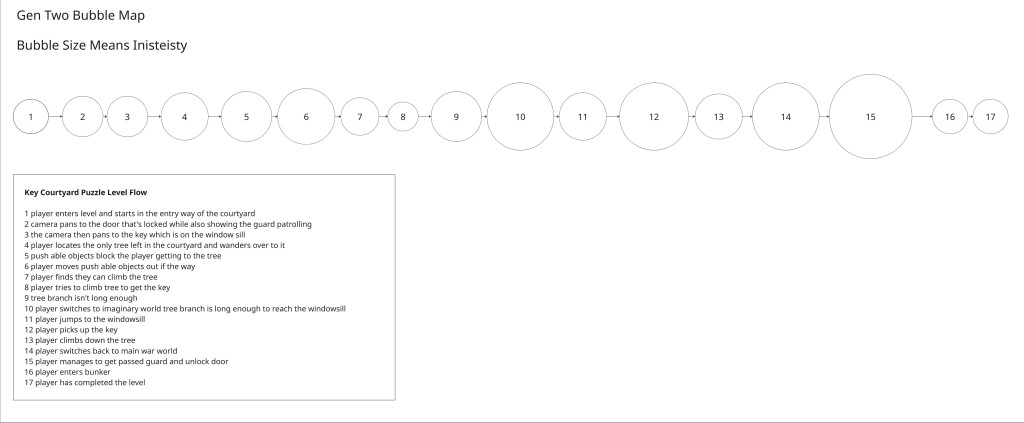
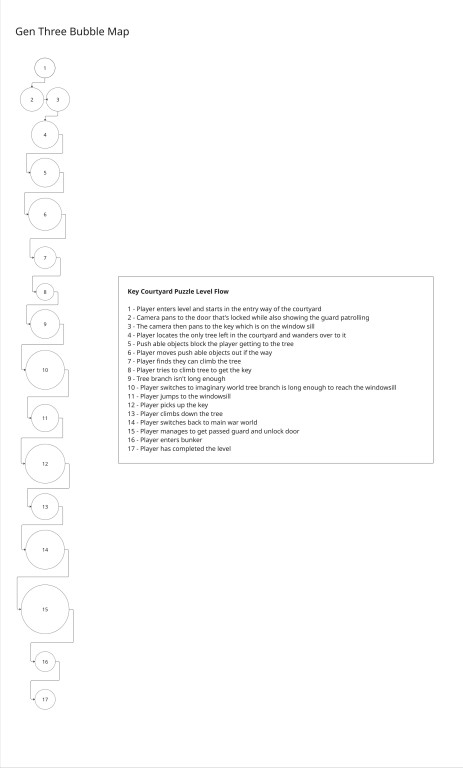
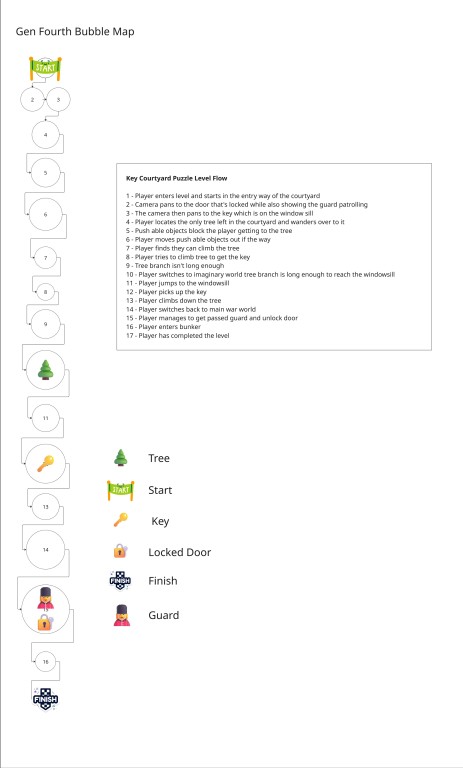
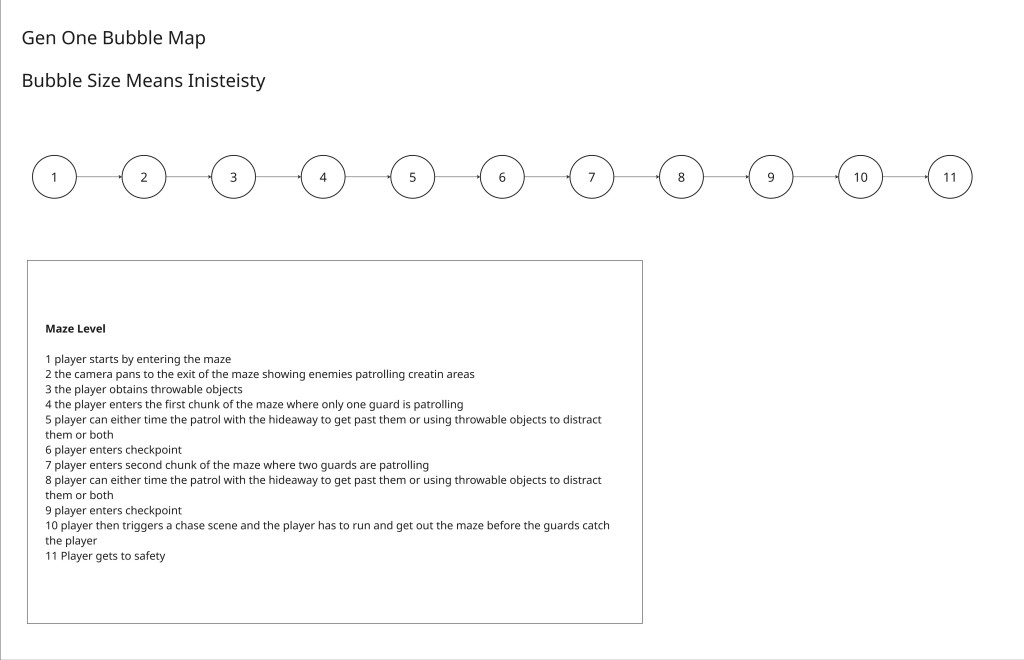
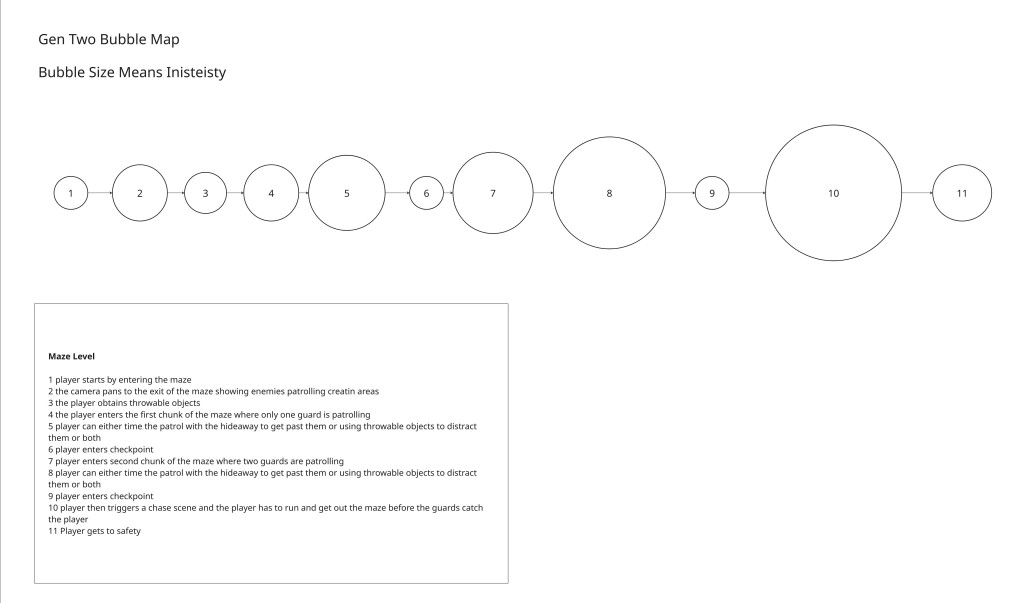
- bubble maps
- annotated pixel maps
- merged layout diagrams
- puzzle flow diagrams
These diagrams were designed to support the game design document and help the team understand the structure of the level before it was built in engine.
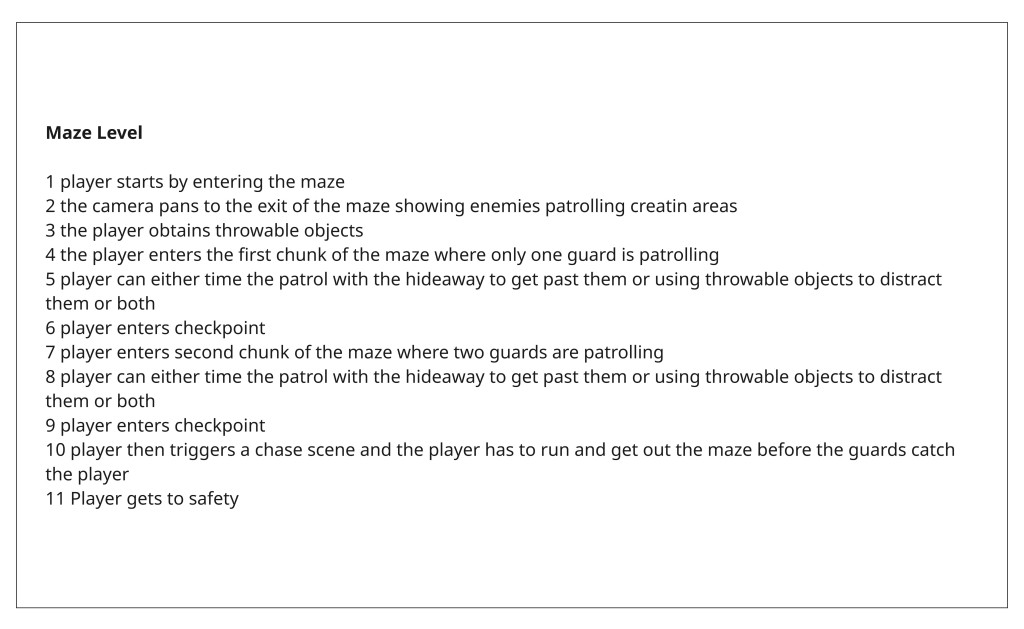
I later created similar diagrams for a second level, which was planned as a stealth maze. This included mapping out the level flow, route structure, patrol areas, and puzzle spaces.
Creating these diagrams helped me apply level design methods I had learned in previous modules, but within a larger team environment. The diagrams gave the team a shared visual reference and made it easier to discuss the level before implementation.
Responding To Early Feedback
After the team’s Shark Tank pitch, we received important feedback about the project’s scope, story, audience, puzzle design, and world-switching mechanic.
The main points were that:
- the story needed more development
- the puzzle scope was too broad
- the target audience was unclear
- the contrast between the real and imaginary worlds needed to be stronger
- the world-switching mechanic needed clearer rules
- the puzzles needed to feel believable for the child character
- the overall genre and experience needed narrowing
This feedback made me rethink the puzzle and level design direction. It became clear that the levels needed to be simpler, clearer, and more closely tied to the player’s understanding of the world-switching mechanic.
I also worked with the art team to adjust one of the courtyard puzzle ideas. The original version involved a tree branch growing longer, but after discussion, this felt like it could look silly or immersion-breaking. I suggested changing it to a leaf bridge, which fitted the visual style better and felt more believable within the game world.
This was an early example of how level design, puzzle logic, and art direction needed to work together.
Prototype Development & Scope Reduction
By Week 4, the team shifted focus toward getting a playable prototype ready for testing.
At this point, we realised that although the mechanics and documentation were progressing, the levels were behind. This was a major issue because without playable levels, we could not properly test the core gameplay loop or see whether the mechanics worked in context.
I was tasked with creating blockouts for the levels I had planned and making them playable enough for testing.
Soon after, I had an emergency meeting with my design lead to discuss the state of the project. During this meeting, we decided that the original tutorial level and camera system would be scrapped. The levels also needed to be reduced in scope so they were more achievable for both the design and art teams.
This was a difficult but important decision. It helped Worlds Apart become more realistic and gave us a clearer chance of producing a playable build.
Camera System Redesign
As part of the scope reduction, I was asked to create a simpler camera system.
The new camera used a spring arm positioned to the side of the character, with camera lag added to make movement feel smoother and more fluid.
Although this was much simpler than the original camera plan, it worked better for the prototype. It supported player movement, helped the game feel more responsive, and reduced the technical and design risks around camera behaviour.
This taught me that simpler systems can sometimes be better, especially when working under time pressure in a team project.
Maze Level Blockout
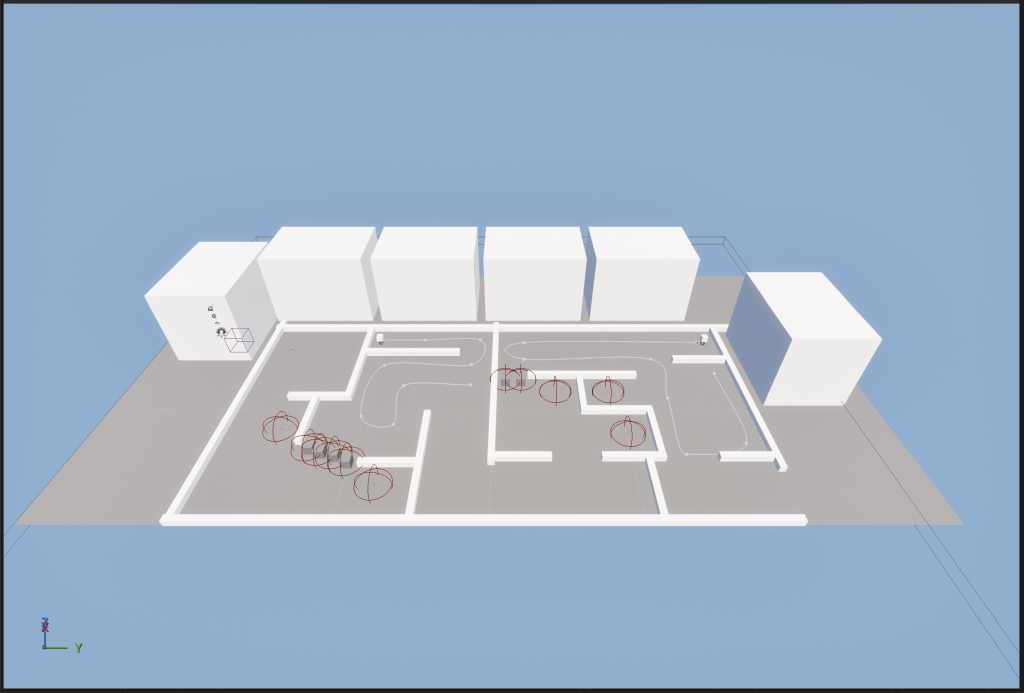
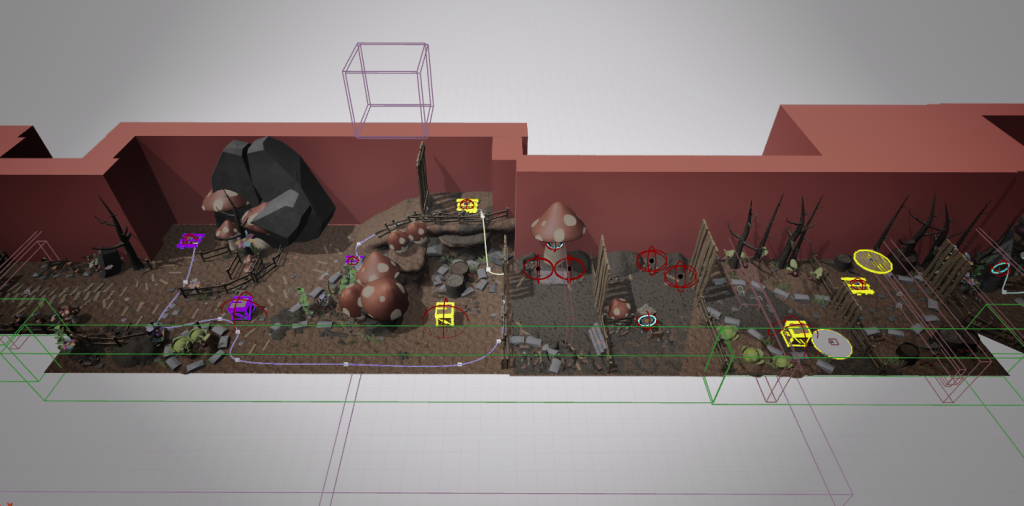
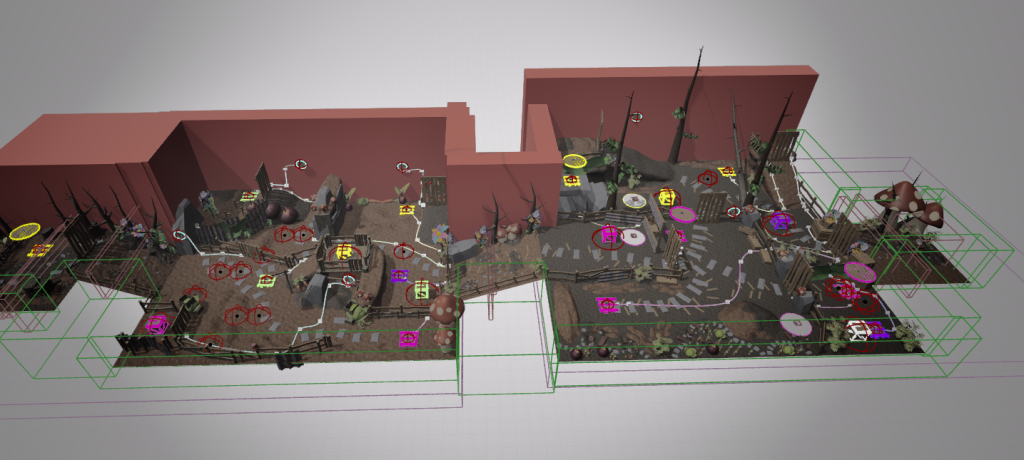
One of my main tasks was blocking out the maze level and adding gameplay elements to make it testable.
I added:
- guard placements
- patrol routes
- throwable objects
- pushable objects
- stealth spaces
- environmental interaction points
The goal was to turn the maze from a basic layout into a playable level that supported stealth, distraction, and puzzle interaction.
The throwable objects allowed the player to distract guards, while the pushable objects helped create more environmental interaction. This helped the maze feel more like a designed gameplay space rather than just a level layout.
First Major Playtest
The Week 5 playtest was one of the biggest turning points in the project.
From my perspective as a level designer, the playtest showed that many players were struggling to understand the level, the objective, and how some mechanics were meant to be used. Many players could not complete the level, and some did not reach the end.
The main problems were:
- the objective was unclear
- the level did not guide players well enough
- players did not understand when to world swap
- movable objects were not obvious enough
- players could skip puzzle sections
- some players could leave the intended play space
- world swapping caused some collision and wall issues
- the level had performance problems
- enemies were not adding enough to the experience
This was an important lesson because it showed that having mechanics in the build is not enough. The level has to teach, support, and reinforce those mechanics through layout, visual language, and player guidance.
As a level designer, I realised I had trusted the intended player route too much. The playtest showed that players do not always behave the way designers expect them to.
Project Rescope & New Direction
After the first major playtest, a group of us discussed the feedback in more detail. It became clear that the original concept was too broad and that the narrative-heavy direction was making the game harder to scope, build, and understand.
During this discussion, I suggested that the player should collect important objects from around the level in order to progress and eventually reach the end.
This gave Worlds Apart a clearer structure:
Explore level → solve puzzle → collect object → unlock progression → reach the end
This idea helped move the project away from an unclear narrative-heavy structure and toward a more focused puzzle game. It also allowed us to keep many of the mechanics and assets we already had, rather than starting from nothing.
This was one of my most important contributions to the project because it helped reshape the overall player goal and made the level design more purposeful.
New Level Planning & Blockouts
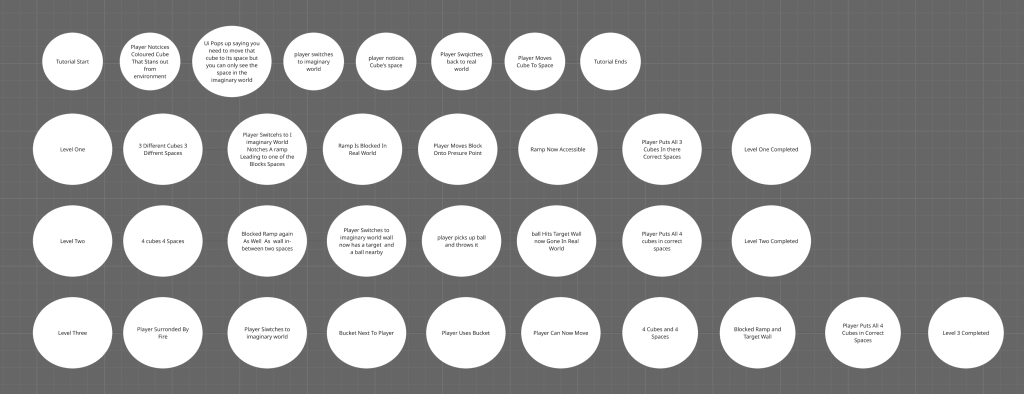
Following the rescope, I was tasked with planning and blocking out new levels based on the revised puzzle direction.
Before building, I created new bubble maps and planned:
- tutorial flow
- puzzle order
- player route
- world-switching moments
- object collection goals
- key interactions
This helped the new version of Worlds Apart feel more structured and allowed the team to test the updated concept quickly.
I then blocked out the levels and implemented the systems created by the tech team so we could prepare for another playtest.
This stage felt much closer to an industry-style greybox process, where the focus is on proving the flow and functionality of the level before final polish.

Tutorial Level Environmental Design
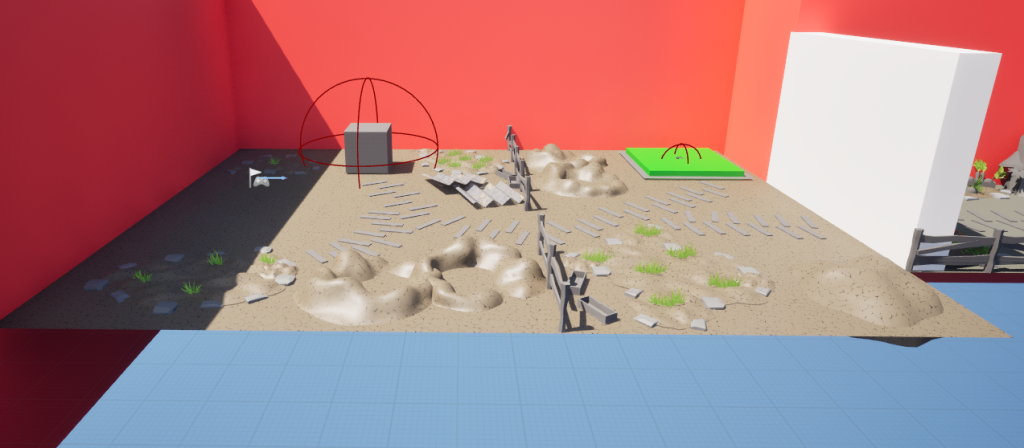
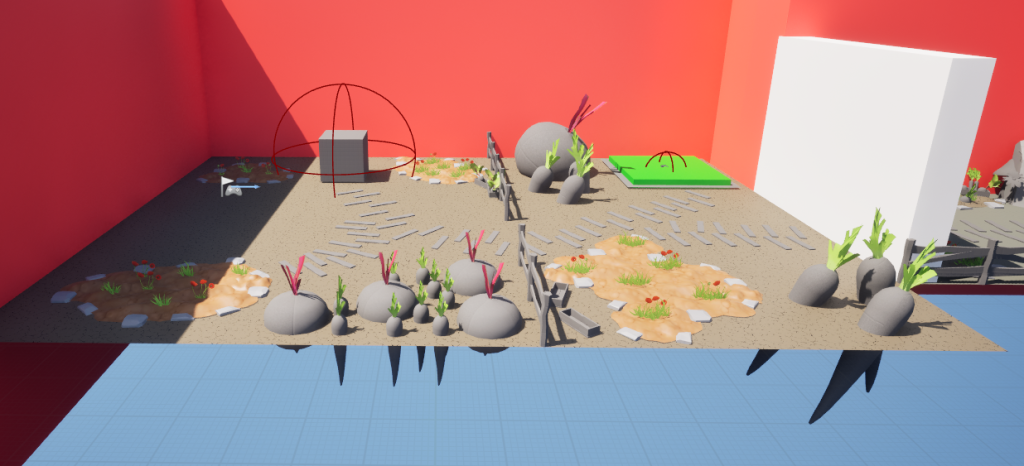
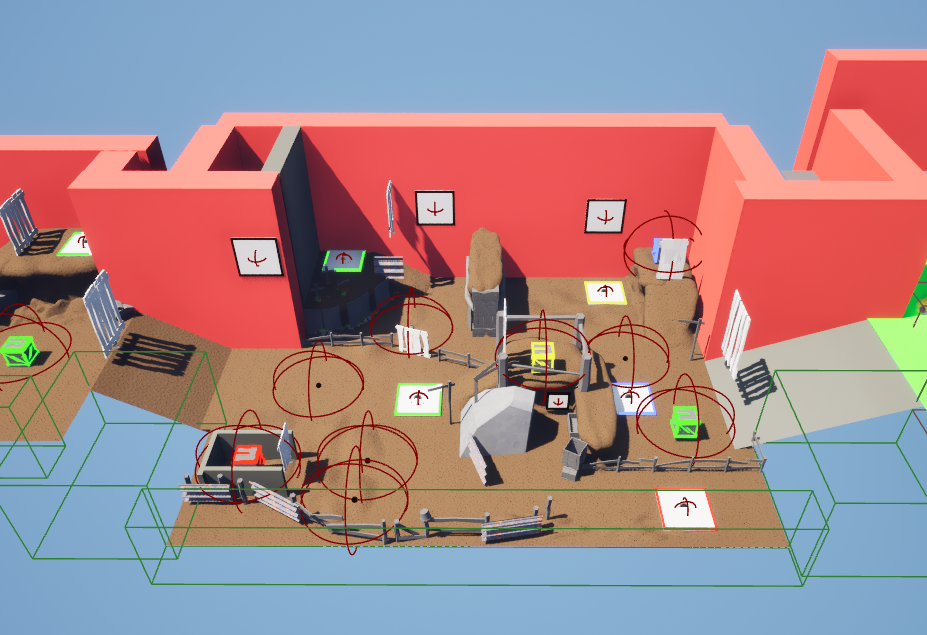
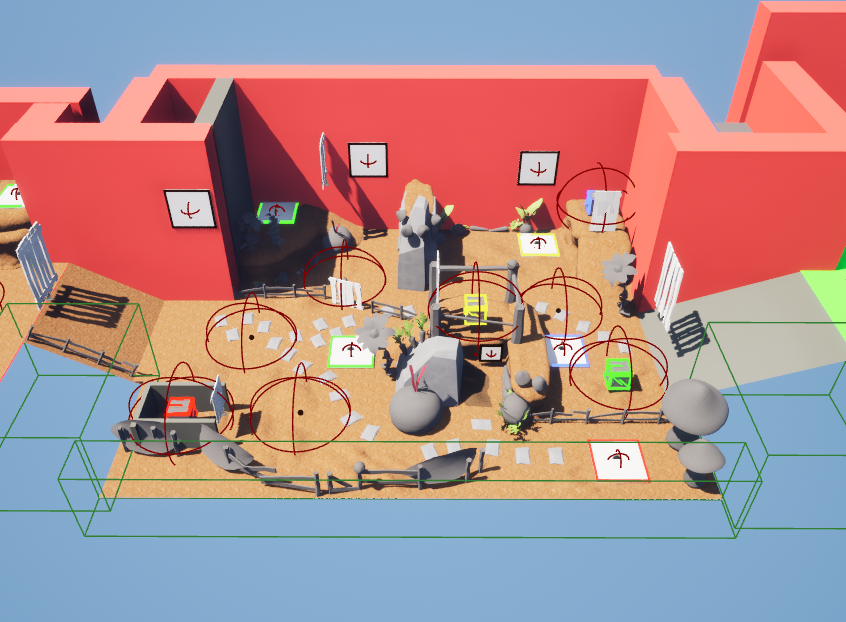
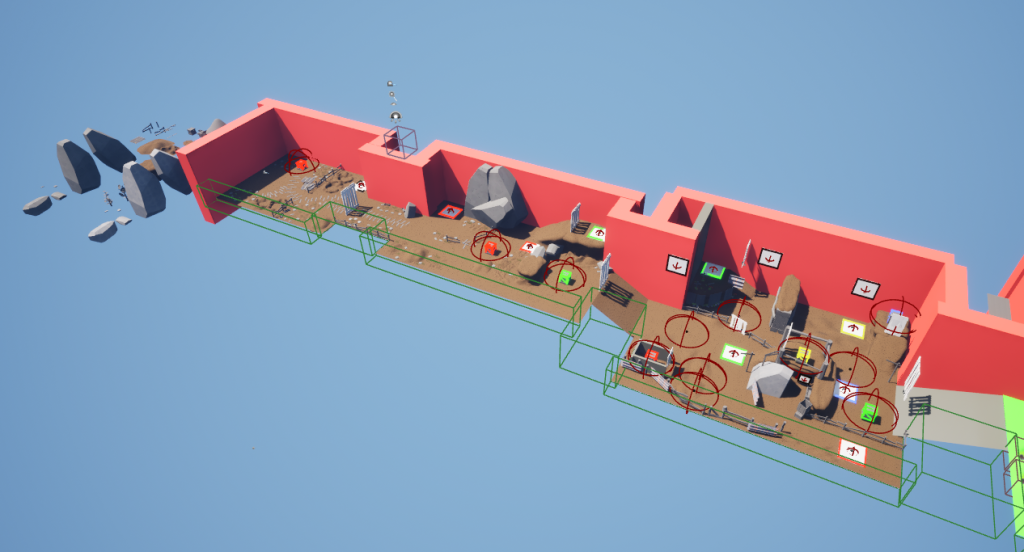
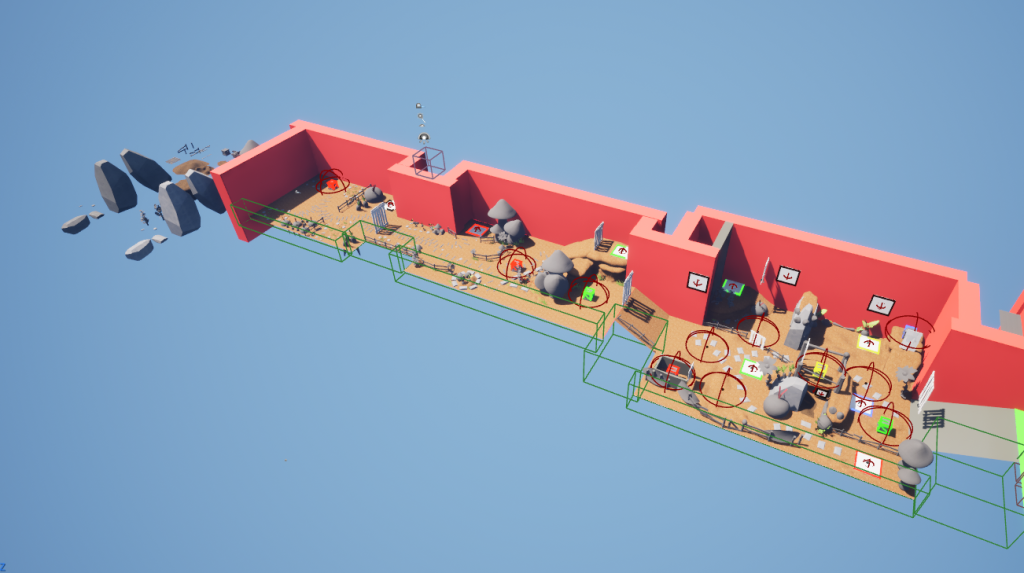
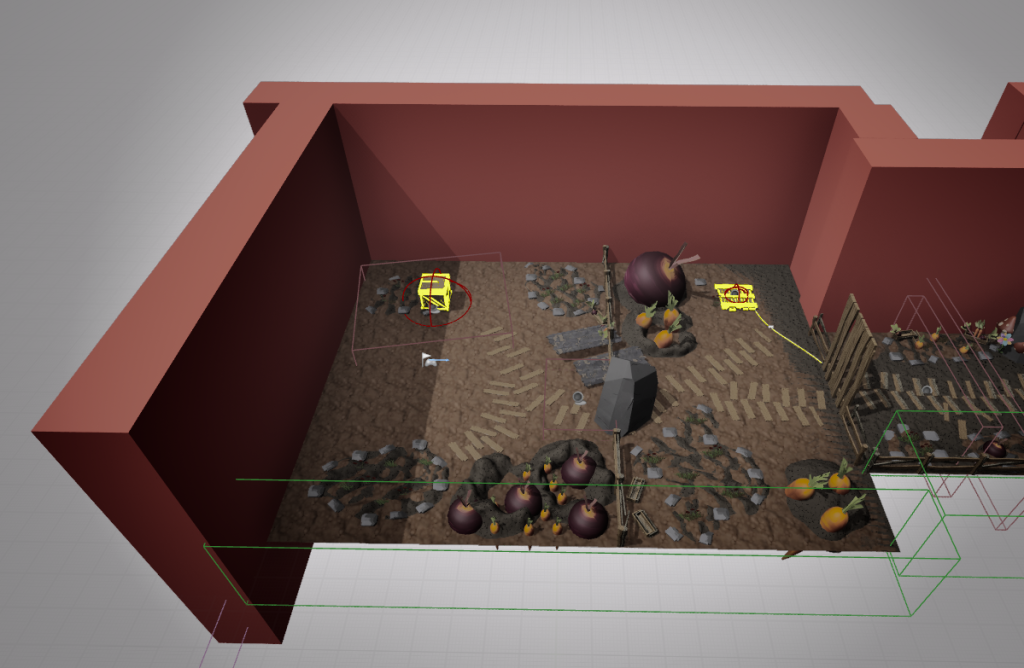
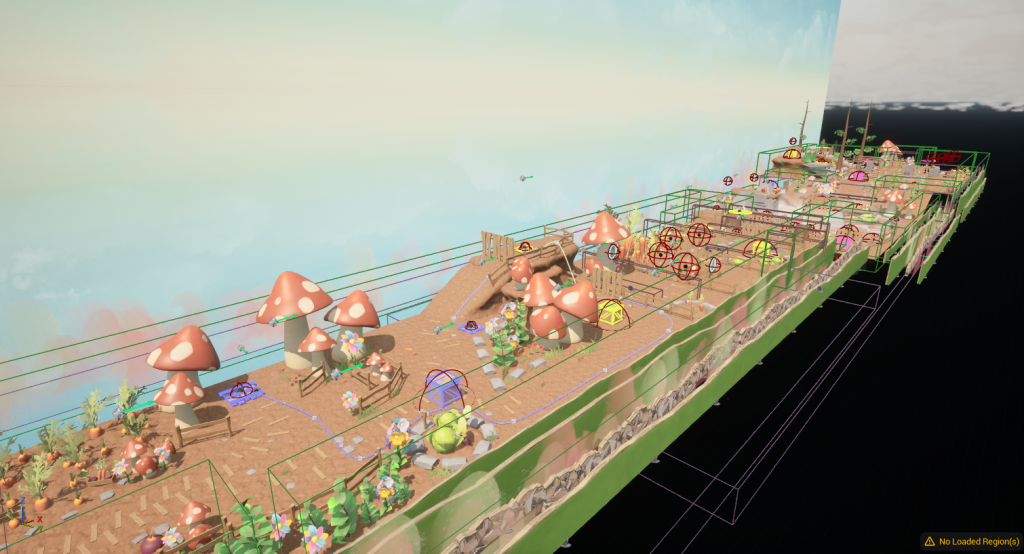
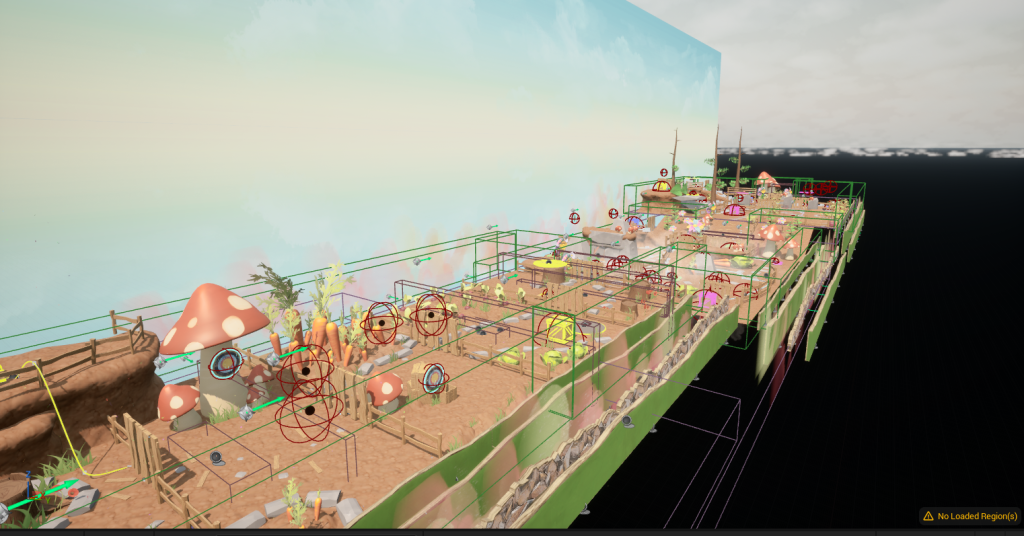
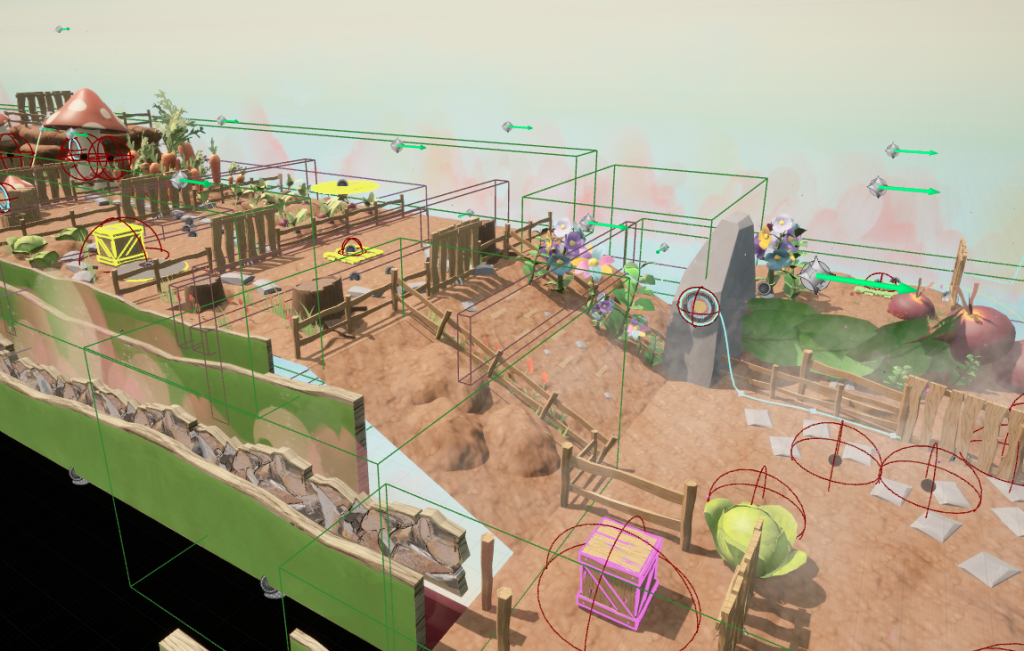
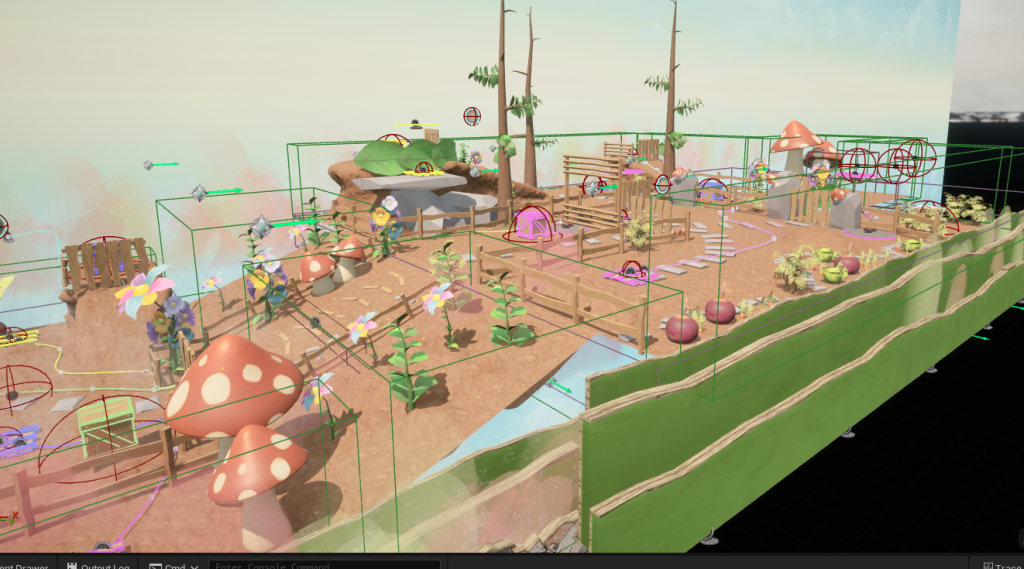
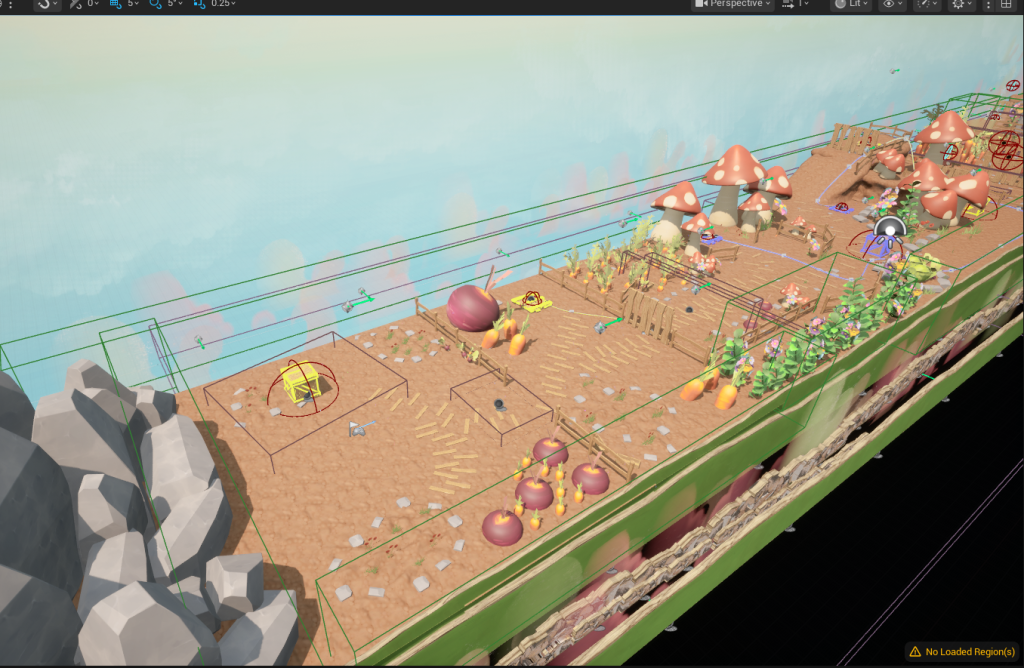
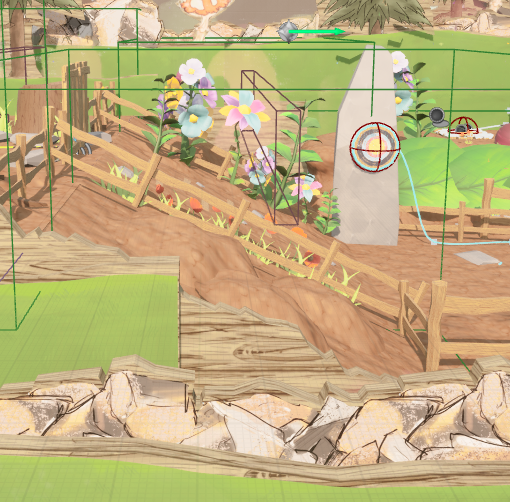
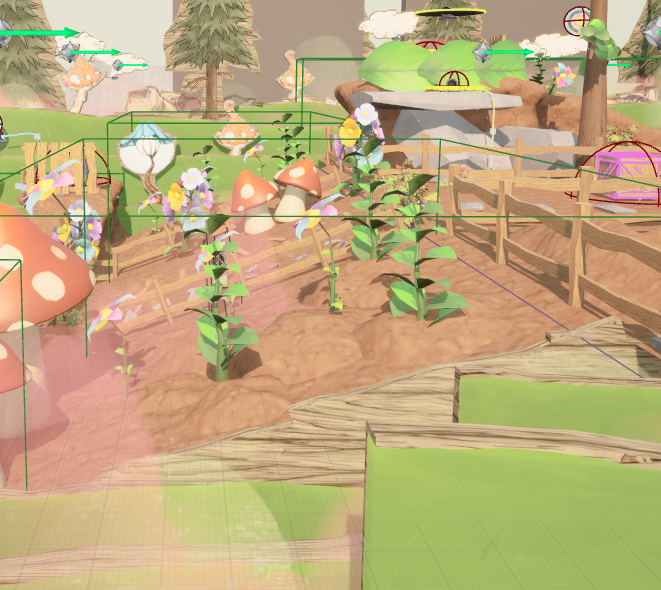
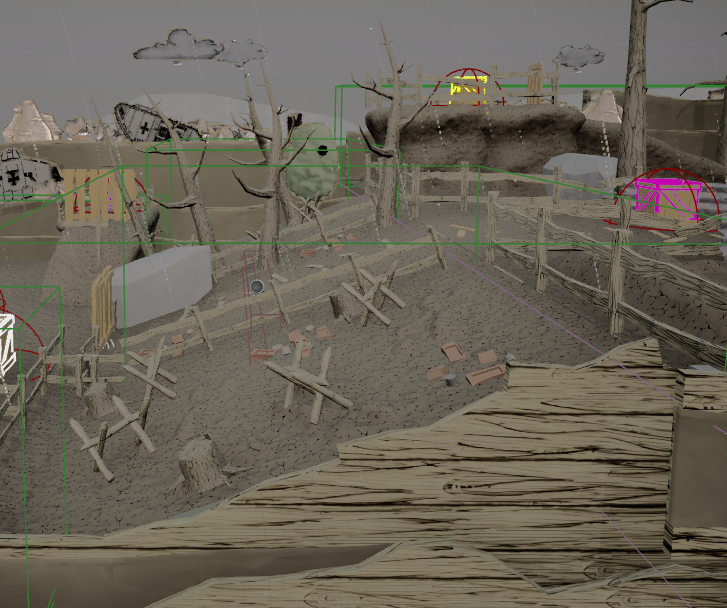
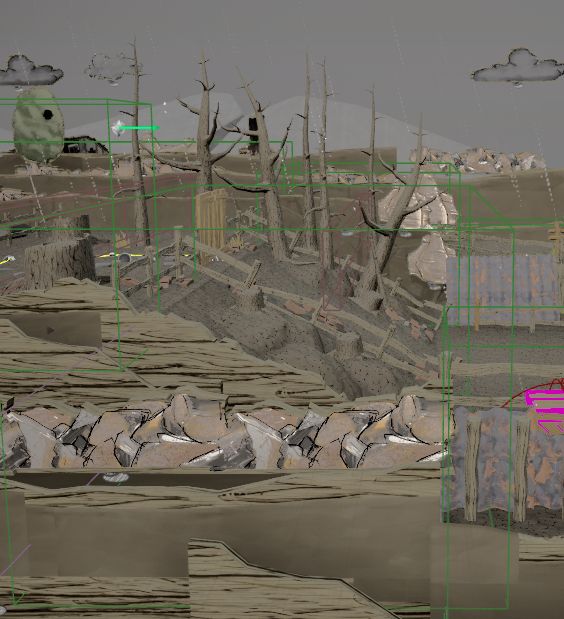
After blocking out the new levels, I worked on the environmental design for the tutorial level using meshes and textures imported by the art team.
I created both:
- the real-world version
- the imaginary-world version
This was important because the world-switching mechanic depended on the player understanding the contrast between the two states. The tutorial level needed to communicate this visually without overwhelming the player.
This task helped me understand how level design and environment art overlap. The space needed to look better, but it also needed to support the mechanic and help the player understand what was changing.
Second Playtest & Feedback Response
The second playtest gave much more positive feedback. Players were beginning to understand the new direction, and the game felt clearer than it had before.
However, the playtest still highlighted several level design tasks that needed improvement. I was assigned to:
- make the dirt and mud look more realistic
- prevent players from skipping parts of the map
- fix collision issues across the level
- adjust door scaling
- add cables or ropes to show what pressure plates connected to
- fix areas where the player could bypass puzzles
- improve visual readability
This stage was heavily focused on responding to player feedback and improving the level based on how people actually played it.
Improving Puzzle Readability
One of my most important later contributions was improving puzzle readability.
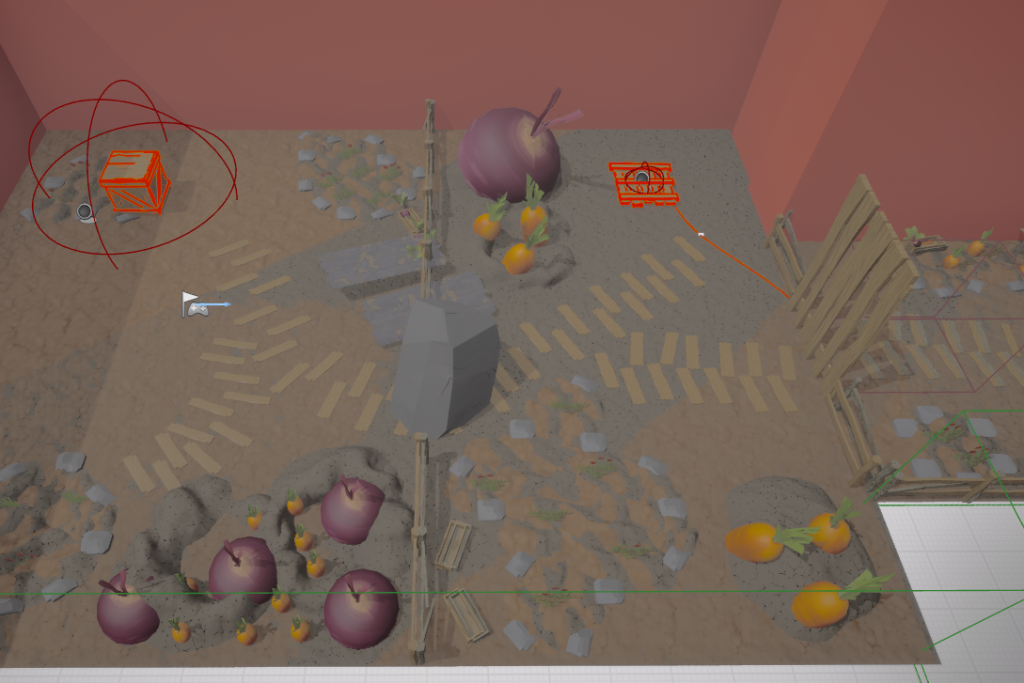
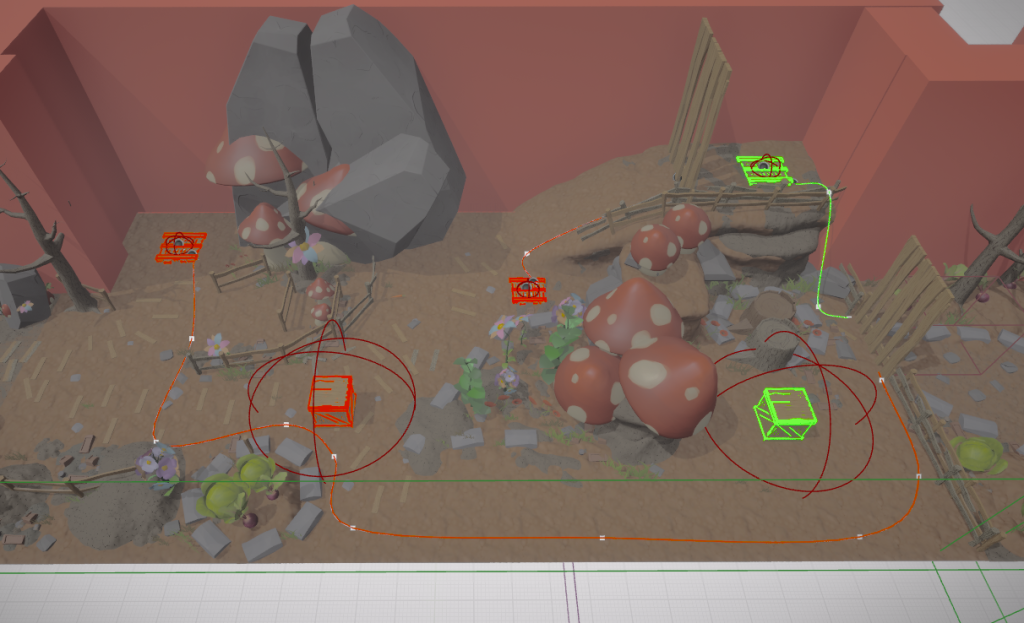
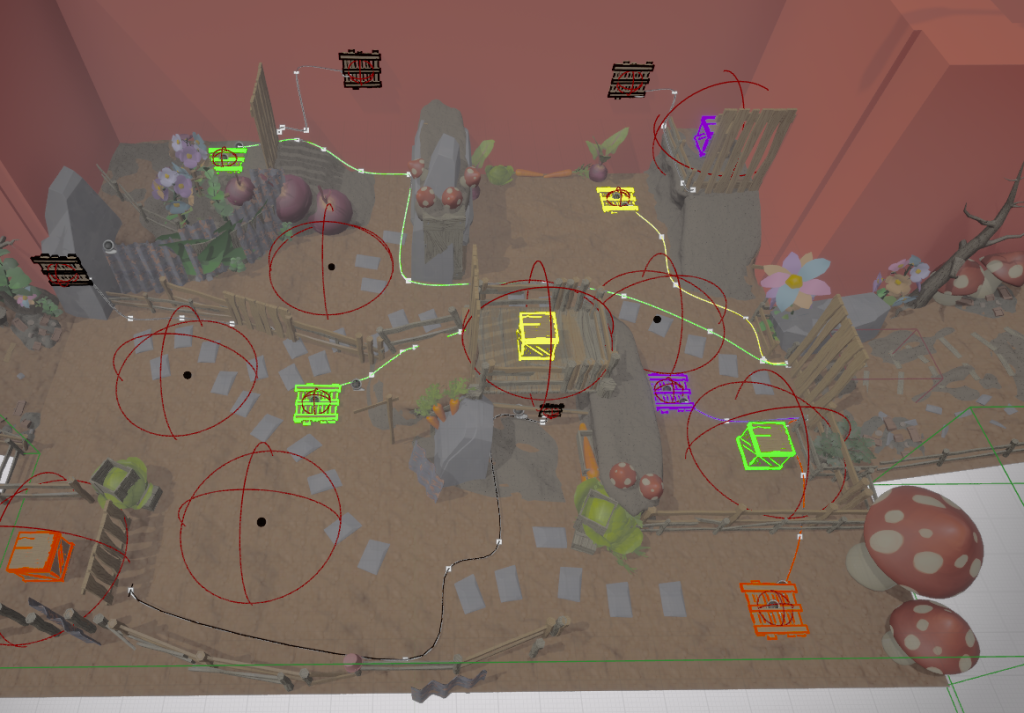
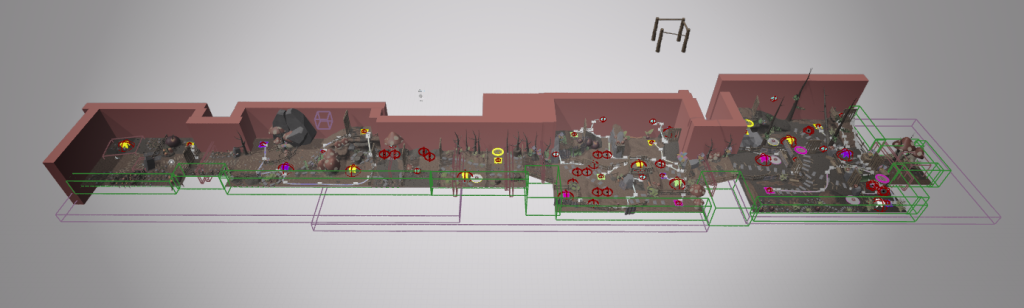
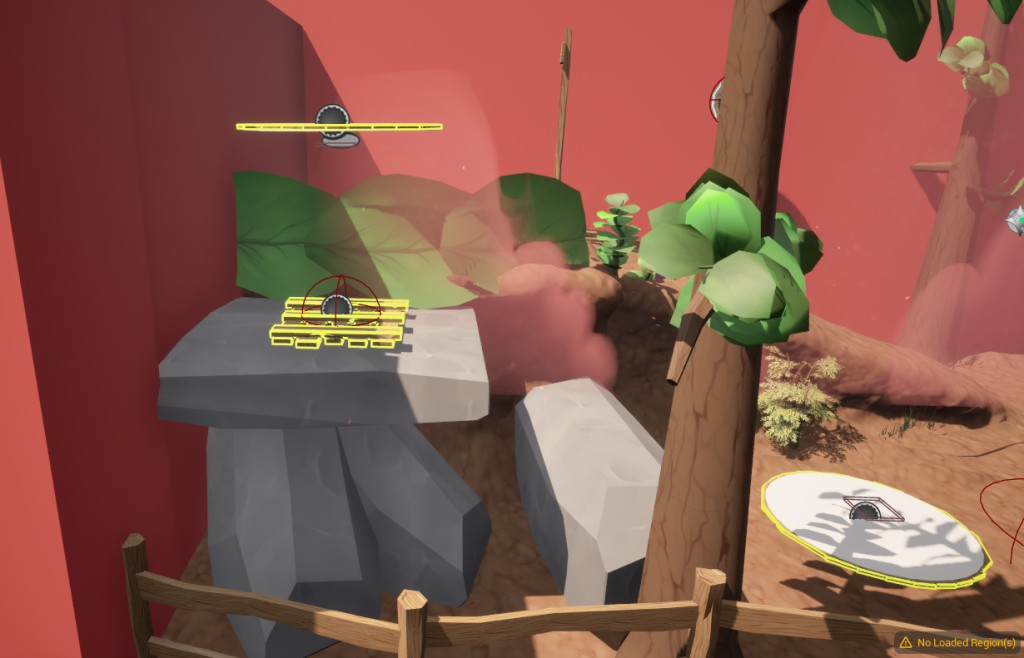
Players had struggled to understand how puzzle elements connected, especially pressure plates and doors. To solve this, I worked with the art team on a cable system that could visually connect interactive objects.
I then added cables throughout the level to show links between:
- pressure plates
- doors
- puzzle objects
- interactable systems
This made the puzzles much clearer because players no longer had to guess what a pressure plate affected.
I also improved readability by:
- changing outline colours
- repositioning VFX
- adjusting door sizes
- making interactable elements more visible
- improving object placement
- refining final puzzle visibility
These changes were small individually, but together they made the level easier to understand and more reliable for players.


Level Polish & Technical Fixes
As the project developed, my work shifted more toward fixing and polishing the level.
I worked on:
- collision fixes
- clipping issues
- blocking off skip routes
- fixing areas where players could leave the intended space
- adjusting level geometry
- re-referencing assets
- organising the level hierarchy
- repositioning VFX after layout changes
- filling background gaps
- fixing hovering meshes
- adjusting ramps and platforms
- making door sizes more consistent
This work was important because even small issues can damage the player experience. If players can skip puzzles, get stuck, clip into objects, or misunderstand the route, the level becomes frustrating.
This part of the project taught me that level design does not stop once the layout exists. A level needs constant checking, especially after new systems, art assets, or extensions are added.


Working Across Disciplines
This module helped me understand how level design connects with other disciplines.
I worked closely with:
Art Team
I used imported meshes and textures to dress levels, discussed puzzle presentation, and worked with them on the cable system.
Tech Team
I implemented mechanics and systems they created into the level and adjusted spaces around world swapping and interaction functionality.
UI / Design Team
I created and imported a control scheme diagram to improve onboarding and make the controls clearer for players.
Other Level Designers
I worked alongside another level designer and helped make sure new level extensions did not break progression or allow puzzle skips.
This helped me understand that level design is not isolated. A level designer has to bring together art, mechanics, systems, UI, and player experience into one playable space.
Playtesting & Iteration
Playtesting was the most important part of this project.
The first major playtest showed that the game was unclear, over-scoped, and difficult for players to understand. Later playtests showed that our changes were improving the experience, especially after adding clearer objectives, better puzzle connections, improved collision, and stronger visual guidance.
The biggest lesson was that players reveal problems that designers often miss.
I learned that I need to design not only for the intended route, but also for what players might try to do instead. Players may jump over puzzles, ignore objects, misunderstand visual clues, or try routes that were never planned.
Because of this, I had to think more carefully about:
- player guidance
- affordances
- fail points
- objective clarity
- collision boundaries
- puzzle readability
- visual hierarchy
- route control
This made me much more aware of how practical and iterative level design really is.
Reflection & Key Learning
Worlds Apart taught me that level design is not just about creating an interesting layout. A good level also needs to communicate clearly with the player.
At the start of the project, I focused heavily on concepts, bubble maps, annotated maps, and planned routes. These were useful, but the playtests showed that planning on paper is not enough. A level only truly works when players can understand it, navigate it, and complete it without needing the designer to explain it.
The Week 5 playtest was the biggest turning point. It showed me that our mechanics were not being introduced clearly enough, our objective was not obvious, and players could break progression in ways we had not expected.
The emergency redesign also taught me the importance of scope control. Removing or reducing ideas can feel like a step backwards, but in this case, it made the game stronger. By simplifying the project into a clearer puzzle game, we created a more achievable and understandable experience.
This module also helped me understand collaborative development much better. In a team of around 20 people, communication is just as important as individual output. A level design change can affect art, tech, UI, VFX, and testing, so it needs to be communicated clearly.
What I Would Improve Next
If I worked on Worlds Apart again, I would improve my process in several ways.
Firstly, I would run earlier greybox playtests. Some of the biggest issues were only discovered once players tested the level, and earlier testing would have helped us fix them before more art and systems were added.
Secondly, I would create clearer puzzle intention documents. For each puzzle, I would define:
- the player goal
- the intended route
- the required mechanic
- possible skip routes
- expected failure points
- visual guidance needed
- how the puzzle connects to the wider level
Thirdly, I would define clearer design pillars earlier. If the team had agreed sooner that the game was about simple puzzle progression, readable world switching, and minimal narrative, we may have avoided some of the scope issues.
I would also keep a stronger changelog of level changes, with before-and-after screenshots showing what was changed and why. This would make my contribution clearer and help the team track iteration more effectively.
Skills Demonstrated
This project demonstrates my ability to:
- work within a large multidisciplinary team
- design level concepts from early ideas
- create bubble maps and annotated pixel maps
- block out playable levels
- implement gameplay systems into level spaces
- respond to playtest feedback
- improve puzzle readability
- use visual affordances to guide players
- fix collision, clipping, and progression issues
- prevent puzzle skips
- work with art, tech, UI, and VFX teams
- rescope a project based on player feedback
- polish levels for a final build
- reflect critically on my own design process
Outcome
Worlds Apart demonstrates my ability to work as a level designer inside a large multidisciplinary team, taking level ideas from planning and documentation through to playable implementation, playtesting, iteration, and final polish.
I helped improve the final player experience by making puzzles clearer, fixing progression issues, preventing skips, implementing VFX, adding visual guidance, and making the levels more reliable.
The biggest lesson I am taking from this module is that level design is an iterative and collaborative process. A level has to support the mechanics, guide the player, fit the art direction, and remain technically reliable.
This project gave me valuable experience working in a larger team and helped me better understand how level design functions within a real production pipeline.